Inside the Lab: How Slot Developers Are Engineering Games You Can't Stop Playing
Walk into any major online casino right now and you'll find hundreds — sometimes thousands — of slot titles competing for your click. They've got dragons, ancient gods, candy kingdoms, rock bands, and everything in between. But here's the thing most casual players don't realize: the differences between these games go way deeper than the wallpaper. The companies building them are locked in a fierce, data-driven battle to design the most compelling, most profitable, and — frankly — most irresistible slot experiences on the planet.
Welcome to the slot machine arms race. And trust us, it's a lot more intense than the reels make it look.
The Big Players and What They're Actually Competing Over
You've probably seen names like IGT, Pragmatic Play, Microgaming, NetEnt, and Play'n GO stamped on the games you spin. These aren't just branding badges — each company represents a distinct design philosophy, a different theory about what keeps players engaged.
IGT (International Game Technology) has been around since the early days of computerized slots and carries massive credibility in both land-based and online markets. They lean heavily on licensed IP — think branded games tied to TV shows, movies, and pop culture — because name recognition lowers the barrier to entry for new players. When someone sees a Wheel of Fortune slot, they already feel comfortable. That familiarity is engineered.
Pragmatic Play, on the other hand, has become one of the fastest-growing forces in the online space, particularly in the US market. Their strategy is volume plus innovation — releasing new titles at a pace that keeps casino lobbies constantly fresh while building features like their signature "Buy Bonus" mechanic that lets players skip straight to free spins. That single feature changed how a huge portion of the player base interacts with games, and competitors scrambled to respond.
Microgaming, one of the oldest names in online gambling software, helped pioneer progressive jackpot networks — the shared prize pools that can climb into the tens of millions and create headlines when they hit. Mega Moolah has paid out some of the largest online jackpots in history, and that reputation alone drives traffic to any casino carrying the game.
So what are they all actually competing over? Three things: retention, differentiation, and perceived value.
Data Is the Real Game Engine
Here's something the glossy trailers don't advertise: modern slot developers collect and analyze enormous amounts of player behavior data. How long do players stay on a game before switching? At what point during a session do they typically leave? Which bonus features generate the most excitement — measured by things like bet increases following a trigger? What audio cues make players feel like something big is about to happen?
This isn't guesswork. It's A/B testing, heatmaps, session analytics, and player feedback loops running continuously in the background. When a developer like Pragmatic Play launches a new title, they're not just hoping it lands — they're monitoring engagement metrics in real time and feeding that data back into the next development cycle.
The result is a kind of evolutionary pressure on game design. Features that generate engagement survive. Features that don't get quietly dropped. Over time, the genre as a whole drifts toward whatever keeps players spinning longest — which is why you've seen such a dramatic rise in cascading reels, expanding wilds, multi-level bonus rounds, and "hold and spin" mechanics over the last several years. Players responded positively, the data confirmed it, and now those features are everywhere.
The Visual and Audio Battlefield
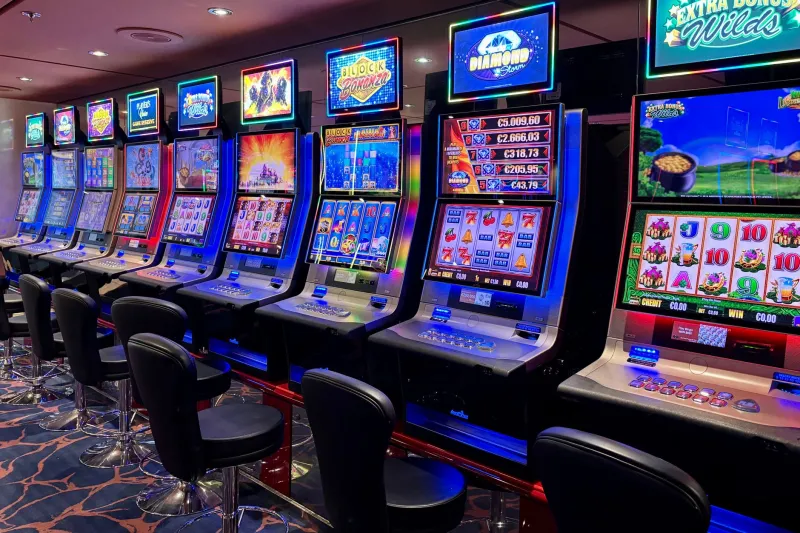
If you've fired up a new slot release lately and felt like you were watching a video game cutscene, you're not imagining things. The graphical investment in top-tier slots has exploded. Companies like NetEnt and Nolimit City are producing 3D-animated characters, cinematic intro sequences, and dynamically shifting backgrounds that react to gameplay events. This isn't just aesthetic flex — it's strategic.
Visual complexity creates what designers call "dwell time." The more visually rich an environment feels, the longer a player tends to explore it before moving on. Audio design plays an equally calculated role. The soundscapes in modern slots are layered specifically to build tension during near-misses, amplify wins with rising musical crescendos, and maintain a subtle ambient hum that makes silence feel uncomfortable — which nudges players to keep spinning just to keep the energy alive.
These aren't accidents. They're the product of dedicated sound studios and UX researchers who study emotional response the same way film composers do.
What Casual Players Miss (And What Sharp Players Notice)
For most people loading up a slot, the experience is pretty surface-level: it looks cool, it feels fun, and sometimes money comes out. But players who dig a little deeper start to notice the architecture underneath.
Volatility profiles, for instance, are a deliberate design choice — not just a mathematical outcome. A developer might specifically engineer a high-volatility game to target players who get bored easily and crave the rush of big, infrequent payouts. A low-volatility title is built for players who prefer steady feedback and longer sessions. These are different audiences, and savvy developers build entire portfolios to serve both.
Bonus frequency is another lever. Some games are designed to trigger bonus rounds often but keep the payouts modest — creating constant stimulation. Others make bonuses rare events that feel genuinely significant when they arrive. Both approaches have dedicated fanbases, and developers study which style performs better in which markets. US players, for example, tend to respond strongly to frequent feature triggers, which has influenced how several European developers have tailored their North American releases.
Then there's RTP placement — the return-to-player percentage that gets advertised prominently but rarely tells the whole story. Developers often build games with variable RTP settings, allowing casinos to choose between, say, 94% and 96.5% depending on their house edge preferences. The same game can feel meaningfully different depending on which version a particular casino is running, and players almost never know which one they're on.
The Innovation Pressure Is Real — And It's Not Slowing Down
Here's what makes this arms race genuinely fascinating: the market is saturated, the competition is global, and the window for any given game to feel "new" keeps shrinking. A mechanic that felt revolutionary in 2020 is now table stakes. Developers are under constant pressure to find the next thing — the feature, the format, the experience that makes players stop scrolling and start spinning.
That pressure is producing some genuinely creative results. Cluster pays, infinite reels, skill-based mini-games embedded inside bonus rounds, and even narrative-driven slot series with continuing storylines across multiple titles — these are all responses to an industry pushing hard against its own ceiling.
For players at PGSlot King, understanding this competitive landscape is actually useful. It means the games you're enjoying aren't random — they're the result of significant investment, testing, and strategic thinking. The best games in any lobby earned their spot there by winning the attention war. And now that you know how that war is fought, you might just look at your next spin a little differently.