After the Crash: The Truth About Why Big Wins Tend to Follow Big Losses at the Slots
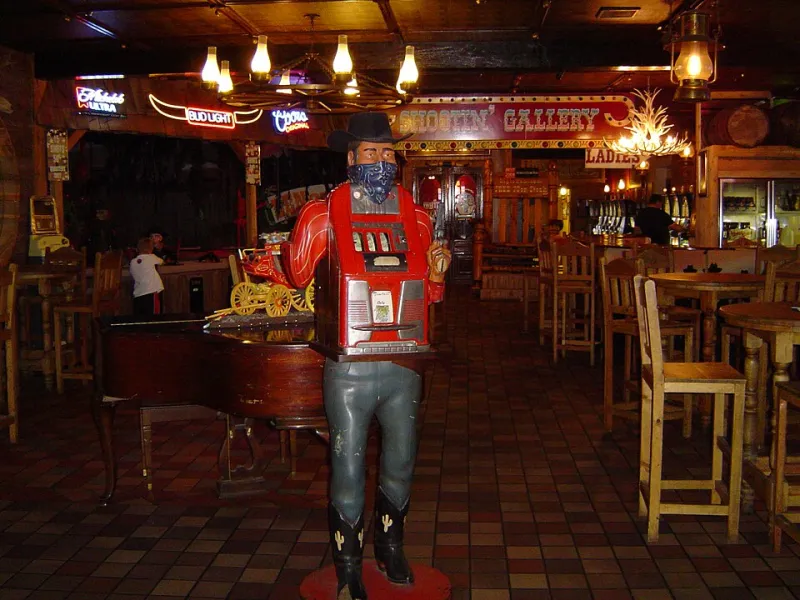
Photo: Valerie Everett from Indianapolis, USA, CC BY 2.0, via Wikimedia Commons
Every slot player has a version of this story. You're down $200, you're ready to walk away, you spin one more time — and suddenly the screen lights up like Times Square on New Year's Eve. The comeback feels almost scripted. Like the machine was saving something up for you.
It's one of the most powerful feelings in casino gaming. And it's also one of the most misunderstood.
So what's actually going on? Is there a real pattern here, or is your brain just a very convincing storyteller?
The Math Doesn't Care About Your Feelings
Let's start with the cold, hard reality. Modern slot machines — whether you're playing at a brick-and-mortar casino in Vegas or spinning through an online platform at midnight — run on Random Number Generators, or RNGs. Every single spin is statistically independent. The machine has no memory. It doesn't know you're down $180. It doesn't owe you anything.
This is the part that trips most players up. Because variance — the natural swings built into every game's math — can absolutely produce sequences that look like a comeback pattern. When you run a game with, say, high volatility and a 96% RTP, you're going to see long cold stretches interrupted by sharp, sudden payouts. That's not a reward system. That's just how the probability distribution is shaped.
Behavioral economists have a name for the mental trap this creates: the Gambler's Fallacy. It's the deeply human tendency to believe that past outcomes influence future ones in a system that's actually memoryless. After a string of losses, our brains start expecting a correction. We feel owed a win. And when one eventually arrives — as it statistically will — we treat it as confirmation of a pattern that was never there.
Why the Illusion Feels So Real
Here's where it gets genuinely interesting. The reason the "comeback sequence" feels so convincing isn't just because wins eventually follow losses — it's because of how we remember both events.
Research in cognitive psychology consistently shows that emotional intensity shapes memory formation. A brutal losing streak registers as a major event. When a big win follows it, the contrast amplifies both experiences. Your brain essentially bookmarks the pairing — loss, then win — and files it as a meaningful sequence. You forget the hundred times a losing streak was followed by more losing. You remember the times the script flipped.
Casino data analysts have noted this phenomenon for years. Players who experience a significant loss event followed by any meaningful win — even one that doesn't fully cover their losses — are disproportionately likely to report the session as a positive experience. The emotional arc matters more than the actual math.
Variance Is the Real Villain (and Hero)
If you want to understand why your worst sessions sometimes end in your best moments, you need to get comfortable with the concept of variance.
High-volatility slots are specifically engineered to produce these dramatic swings. They pay out less frequently, but when they do, the payouts tend to be significant. This design creates exactly the kind of emotional rollercoaster where deep losses and sharp wins cluster together more often than you'd see on a low-volatility game.
Playing a high-variance slot during a cold stretch isn't evidence that a payout is "due." It's just evidence that you're playing a high-variance slot. The mathematics that make those big wins possible are the same mathematics that make the long dry spells inevitable. You can't have one without the other.
Low-volatility games, by contrast, tend to produce more frequent but smaller wins. They feel steadier. Ironically, they're less likely to produce the dramatic comeback narrative — which is partly why they don't get talked about as much. Nobody's posting a video of a steady, incremental session.
What This Means for Your Bankroll
Understanding the reality behind comeback sequences has some genuinely practical implications for how you manage your money at the reels.
Don't chase the comeback. The single most dangerous thing the redemption narrative does is justify continued play during a losing session. If you've hit your stop-loss limit, the math doesn't change just because you feel like a win is imminent. That feeling is a cognitive illusion, not a signal.
Size your sessions for variance. If you're playing high-volatility games, you need a larger bankroll buffer to survive the cold stretches without busting out before the swings work in your favor. A common rule of thumb among experienced players is to have at least 100-200x your bet size available for a meaningful high-variance session.
Reframe what a 'recovery' actually looks like. Real bankroll recovery doesn't happen in a single dramatic spin. It happens over time, through disciplined bet sizing and session management. The idea that one big hit will erase a bad session is statistically possible but strategically unreliable.
Use the psychology to your advantage. Knowing that your brain will overweight dramatic win moments means you can deliberately set win goals that feel satisfying — even if they don't fully recoup losses. Hitting a meaningful win and walking away still feels like a comeback, and protecting those moments matters.
The Story Your Brain Wants to Tell
There's nothing wrong with enjoying the emotional arc of slot play. The tension, the near-misses, the sudden reversal — that's part of what makes the experience compelling. The issue isn't that the comeback feels good. The issue is when the story starts making decisions for you.
The players who navigate variance best aren't the ones who stop feeling the excitement of a big win after a rough stretch. They're the ones who can feel that excitement and still know, somewhere in the back of their mind, that the machine was never actually building toward that moment. It just happened to land there.
Understanding the math doesn't kill the thrill. If anything, it makes you a smarter, more durable player — someone who can ride the swings without getting swept away by them.
And honestly? That's the real comeback worth rooting for.